Upper Limb Recovery After Stroke: How Neuro Physiotherapy Can Help
In this article
Upper Limb Recovery After Stroke: How Neuro Physiotherapy Can Help
Adult neurological recovery can affect much more than a single movement. After a stroke, brain injury, spinal cord injury, or another neurological condition, adults may experience changes in strength, balance, coordination, endurance, mobility, and independence.
Adult neuro-rehabilitation focuses on the person's current abilities and meaningful functional goals. Physiotherapy may be one part of this process, with treatment selected after assessment and coordinated with other healthcare professionals when required.
For adults in Delhi NCR, including Faridabad, Gurgaon, Noida, and Ghaziabad, Neuromotion India provides specialized rehabilitation support for neurological and functional challenges.
Quick Summary
What Is Upper Limb Recovery After Stroke? can be addressed through individualized rehabilitation.
Why Does Stroke Affect Arm and Hand Function? can be addressed through individualized rehabilitation.
How Neuro Physiotherapy Supports Upper Limb Recovery can be addressed through individualized rehabilitation.
Improving Shoulder and Arm Movement can be addressed through individualized rehabilitation.
Improving Hand Function After Stroke can be addressed through individualized rehabilitation.
The Role of Repetition and Task-Specific Practice can be addressed through individualized rehabilitation.
Rehabilitation goals should be based on assessment, safety, and the individual's priorities.
Recovery varies significantly between adults, and there is no universal recovery timeline.
Multidisciplinary rehabilitation may be appropriate for complex neurological conditions.
Professional assessment can help determine the most suitable rehabilitation pathway.
Table of Contents
1. What Is Upper Limb Recovery After Stroke?
2. Why Does Stroke Affect Arm and Hand Function?
3. How Neuro Physiotherapy Supports Upper Limb Recovery
4. Improving Shoulder and Arm Movement
5. Improving Hand Function After Stroke
6. The Role of Repetition and Task-Specific Practice
7. Managing Stiffness and Changes in Muscle Tone
8. Upper Limb Recovery and Everyday Independence
9. How Neuromotion India Helps Adults After Stroke
10. When Should You Seek Professional Rehabilitation?
What Is Upper Limb Recovery After Stroke?
Upper limb recovery after stroke focuses on improving the movement and functional use of the affected arm and hand. Stroke can affect strength, coordination, sensation, muscle tone, and the ability to perform purposeful movements. Research suggests that roughly 55% to 75% of stroke survivors experience some degree of upper limb impairment in the months following a stroke, making the arm and hand among the most commonly affected areas of function.
Why Does Stroke Affect Arm and Hand Function?
A stroke can disrupt areas of the brain responsible for movement and coordination. As a result, an adult may experience weakness, reduced control, stiffness, altered sensation, difficulty reaching, or difficulty using the hand during daily activities. The pattern varies from person to person.
If you or your family member is experiencing difficulty with why does stroke affect arm and hand function?, a professional rehabilitation assessment can help identify appropriate next steps.
How Neuro Physiotherapy Supports Upper Limb Recovery
Neuro physiotherapy uses structured, goal-oriented rehabilitation to help a person practise meaningful movements and improve participation in daily activities. Treatment is selected according to the individual's assessment, abilities, medical condition, and recovery goals.
Improving Shoulder and Arm Movement
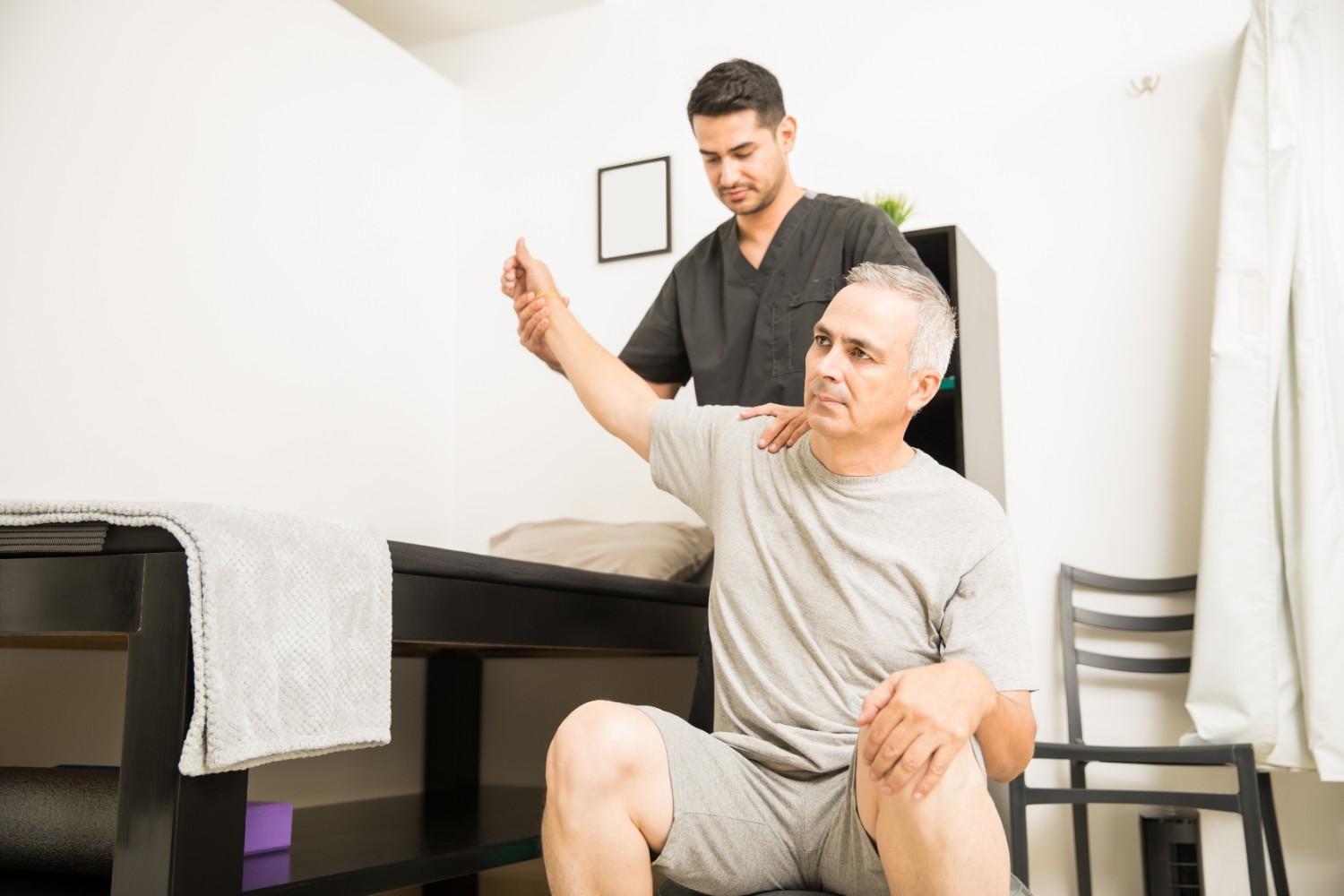
Therapy may address positioning, active movement, strength, reaching, and controlled use of the shoulder and arm. Appropriate exercises are selected to avoid unnecessary strain while gradually encouraging functional movement.
Improving Hand Function After Stroke
Hand recovery can involve practising grasping, releasing, reaching, object manipulation, and other purposeful tasks. Repetition and task-specific practice may help the person work toward greater functional use of the affected hand.
If you or your family member is experiencing difficulty with improving hand function after stroke, a professional rehabilitation assessment can help identify appropriate next steps.
The Role of Repetition and Task-Specific Practice
Recovery often involves repeated practice of relevant movements. Rather than focusing only on isolated exercises, rehabilitation may incorporate tasks that relate directly to the person's everyday goals, such as reaching for an object or using the affected hand during grooming.
Managing Stiffness and Changes in Muscle Tone
Some adults develop increased muscle tone or stiffness after stroke. Rehabilitation may include positioning, movement strategies, stretching where appropriate, active exercises, and coordination with the wider medical team when additional management is required.
Upper Limb Recovery and Everyday Independence
The ultimate goal is not simply moving the arm but improving participation in daily life. Therapy may therefore connect upper limb training with dressing, grooming, eating, writing, household tasks, work-related activities, or other meaningful goals.
If you or your family member is experiencing difficulty with upper limb recovery and everyday independence, a professional rehabilitation assessment can help identify appropriate next steps.
How Neuromotion India Helps Adults After Stroke
Neuromotion India provides rehabilitation support for adults with neurological and functional challenges. An individualized assessment can help identify movement limitations and establish practical rehabilitation goals. Patients from Faridabad and Delhi NCR can seek professional assessment based on their needs.
When Should You Seek Professional Rehabilitation?
Professional assessment can be useful when an adult has persistent weakness, poor coordination, stiffness, difficulty using the affected arm, shoulder concerns, or reduced independence after stroke. Rehabilitation goals can change as recovery progresses, so reassessment may also be appropriate.
When to Seek Professional Help
Professional rehabilitation assessment may be appropriate when an adult has persistent or worsening difficulty with movement, balance, walking, transfers, upper limb function, endurance, or everyday independence. New or sudden neurological symptoms require urgent medical evaluation rather than waiting for routine physiotherapy.
Do not delay professional evaluation when functional difficulties are interfering with safety or everyday life.
Conclusion
Upper Limb Recovery After Stroke: How Neuro Physiotherapy Can Help should be approached as an individualized rehabilitation process rather than a fixed set of exercises. Physiotherapy can focus on practical goals such as mobility, balance, strength, coordination, endurance, and participation in everyday activities, depending on the individual's condition.
Recovery can vary substantially between adults. A structured assessment can help identify current abilities, limitations, safety considerations, and realistic goals. Where needed, physiotherapy can also be coordinated with other rehabilitation professionals to support a broader recovery plan.
Neuromotion India offers specialized adult neuro-rehabilitation support across Delhi NCR, including Faridabad, Gurgaon, Noida, and Ghaziabad. Book an offline consultation with the rehabilitation team to receive a personalized assessment and understand the most appropriate rehabilitation pathway for your condition.
Frequently Asked Questions
1. Can physiotherapy improve arm movement after stroke?
Physiotherapy may help improve movement and functional use of the affected upper limb, although outcomes vary according to stroke severity, neurological involvement, health status, and rehabilitation participation.
2. How long does upper limb recovery take after stroke?
There is no single recovery timeline. Progress depends on individual factors and may continue over an extended period with appropriate rehabilitation.
3. Can the hand recover after a stroke?
Hand recovery is possible for many adults, but the extent varies. Rehabilitation can focus on grasp, release, coordination, sensation, and functional tasks.
4. Should I exercise a weak arm after stroke?
Exercises should be selected according to the individual's assessment. Unsupervised or inappropriate exercises may not address the person's specific limitations.
5. Can physiotherapy help with a stiff arm after stroke?
Neuro physiotherapy can address movement, positioning, functional activity, and strategies for managing stiffness as part of an individualized plan.
6. Can upper limb therapy help with dressing and eating?
Yes. Therapy can incorporate task-specific practice related to dressing, eating, grooming, and other everyday activities when appropriate.
7. Is stroke rehabilitation useful months after a stroke?
Rehabilitation may remain useful beyond the early phase because functional goals can change and opportunities for practice and adaptation can continue.
8. What is neuro physiotherapy?
Neuro physiotherapy is rehabilitation focused on movement and function affected by neurological conditions such as stroke, brain injury, spinal cord injury, Parkinson's disease, and other neurological disorders.
9. Where can adults get stroke rehabilitation in Faridabad?
Adults in Faridabad and the wider Delhi NCR region can seek assessment from a specialized neuro-rehabilitation provider such as Neuromotion India.
10. When should an adult after stroke see a physiotherapist?
Assessment may be appropriate when weakness, stiffness, balance problems, reduced arm use, or difficulty with everyday activities continues after stroke.