Personalized Physiotherapy for Adults With Neurological Conditions
In this article
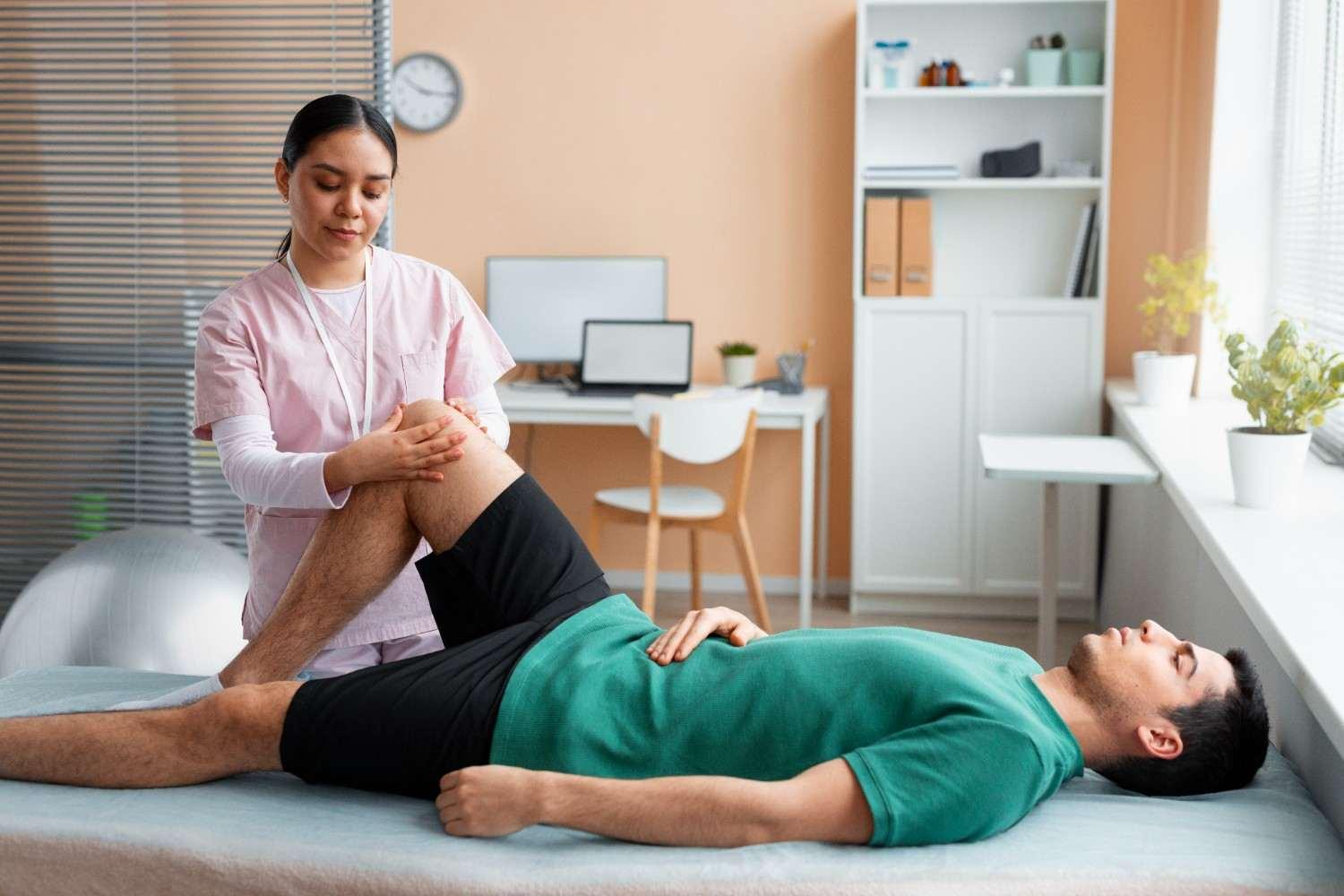
Neurological conditions can affect movement and everyday function in many different ways. Adults living with stroke, brain injury, spinal cord injury, Parkinson's disease, multiple sclerosis, and other neurological disorders may experience difficulties with balance, strength, coordination, walking, endurance, or performing daily activities.
Because these challenges vary from person to person, physiotherapy for neurological conditions is not necessarily the same for every adult. A personalized approach considers the individual's current abilities, functional limitations, rehabilitation goals, and safety requirements before developing an appropriate therapy plan.
Personalized physiotherapy may form one part of a broader neuro rehabilitation program. Depending on the individual's condition and goals, therapy may focus on movement, balance, mobility, strength, coordination, endurance, and functional independence.
For adults seeking physiotherapy in Faridabad, an individualized assessment can help identify current rehabilitation needs and establish realistic functional goals. Neuromotion India provides specialized rehabilitation support across Faridabad and the wider Delhi NCR region.
Quick Summary
- Neurological conditions can affect movement and function differently in every individual.
- Personalized physiotherapy considers the person's abilities, limitations, goals, and safety needs.
- Treatment may address balance, mobility, strength, coordination, endurance, and functional movement.
- Physiotherapy goals can change as an individual's abilities develop.
- Functional activities can help connect therapy with everyday independence.
- Regular assessment can help monitor progress and guide changes to the rehabilitation plan.
- Rehabilitation should focus on realistic and meaningful goals rather than a fixed recovery timeline.
- Professional assessment can help determine the most appropriate physiotherapy and rehabilitation approach.
Table of Contents
- What Is Personalized Physiotherapy for Neurological Conditions?
- Why Do Adults With Neurological Conditions Need Individualized Physiotherapy?
- How Assessment Helps Develop a Personalized Therapy Plan
- Addressing Strength, Movement, and Coordination
- Improving Balance and Mobility
- Supporting Walking and Functional Independence
- Building Endurance Through Progressive Therapy
- Connecting Physiotherapy With Everyday Activities
- Why Regular Reassessment Is Important
- How Neuromotion India Supports Personalized Physiotherapy
- When Should You Seek Professional Physiotherapy?
- Conclusion
- Frequently Asked Questions
What Is Personalized Physiotherapy for Neurological Conditions?
Personalized physiotherapy is an approach in which rehabilitation activities are selected according to an individual's specific functional needs rather than applying exactly the same routine to every patient.
Neurological conditions can affect the nervous system and movement in different ways. As a result, two adults with the same diagnosis may have different levels of mobility, balance, strength, coordination, and independence.
A personalized physiotherapy plan may consider:
- Current movement abilities
- Muscle strength
- Balance and postural control
- Walking and mobility
- Coordination
- Endurance
- Transfers
- Functional independence
- Safety during movement
- Individual rehabilitation goals
The specific focus depends on the person's assessment.
For example, an adult recovering from a stroke may need support with walking and balance, while another person may have greater difficulty using an affected upper limb. Someone with Parkinson's disease may have different movement and mobility priorities.
This is why an individualized approach can be important when providing physiotherapy for neurological conditions.
Why Do Adults With Neurological Conditions Need Individualized Physiotherapy?
Neurological conditions can produce complex and highly variable functional changes.
A person's symptoms may depend on factors such as the type of neurological condition, the areas affected, the severity of functional limitations, existing health factors, and the person's current mobility.
A standardized exercise program may therefore not address every person's most important rehabilitation needs.
Personalized neurological physiotherapy allows the rehabilitation professional to identify which areas are most relevant to the individual's goals.
For example, one person's rehabilitation may emphasize:
- Sitting and standing control
- Transfers
- Walking
- Balance
Another person's plan may focus more on:
- Upper-limb movement
- Coordination
- Endurance
- Functional activities
The rehabilitation plan can also change over time. As a person develops greater control or independence, activities may be progressed or modified.
For adults looking for physiotherapy in Faridabad, this individualized approach can help keep therapy connected to practical functional goals.
How Assessment Helps Develop a Personalized Therapy Plan
Assessment is an important part of developing an individualized rehabilitation program.
Before selecting appropriate exercises or activities, a rehabilitation professional can assess the person's current abilities and limitations.
Depending on the neurological condition, assessment may consider:
- Movement quality
- Muscle strength
- Balance
- Coordination
- Walking ability
- Transfers
- Endurance
- Level of assistance required
- Functional activities
- Individual goals
The assessment provides a baseline that can be used to understand the person's starting point.
It also helps identify which activities may be appropriate and what level of support may be required.
For example, a person who cannot safely stand without assistance may require a different starting point from someone who can walk independently but has difficulty with balance or endurance.
This allows neuro physiotherapy to be adjusted according to the individual's current functional level.
Regular reassessment can then help determine whether the plan should continue in its current form or be progressed as abilities change.
Addressing Strength, Movement, and Coordination
Strength and movement control can be affected by many neurological conditions.
However, rehabilitation does not focus only on making muscles stronger. It may also address how effectively a person can use that strength during functional movements.
For example, rehabilitation may work toward helping a person:
- Move from sitting to standing
- Support body weight
- Reach for an object
- Control a limb during movement
- Perform repeated functional movements
- Improve movement consistency
- Use an affected side more effectively
Coordination can also be an important consideration.
A person may have sufficient strength to perform a movement but still experience difficulty controlling its timing, direction, or accuracy.
Personalized physiotherapy for neurological conditions can therefore consider both physical capacity and movement control.
The appropriate activities depend on the person's assessment and rehabilitation goals.
Improving Balance and Mobility
Balance is closely connected to independence.
Difficulty maintaining balance can affect sitting, standing, walking, turning, reaching, and navigating different environments.
Personalized physiotherapy may include activities designed to address balance and postural control according to the individual's current abilities.
Progress may involve moving from more supported activities toward progressively challenging functional tasks when appropriate.
For example, rehabilitation may include:
- Maintaining sitting balance
- Practicing standing
- Weight shifting
- Controlled reaching
- Stepping
- Turning
- Walking
- Navigating different surfaces
The level of challenge should be appropriate for the individual's abilities and safety.
Improving balance does not necessarily mean eliminating every risk associated with movement. Instead, rehabilitation may focus on helping the person develop better control and appropriate strategies for functional activities.
For people seeking physiotherapy in Faridabad, professional assessment can help determine which balance and mobility activities are appropriate.
Supporting Walking and Functional Independence
Walking is a common rehabilitation goal for adults with neurological conditions, but the objective of physiotherapy is not necessarily to improve walking speed alone.
Depending on the individual, therapy may focus on:
- Step control
- Foot placement
- Weight shifting
- Walking endurance
- Balance while walking
- Turning
- Walking with an appropriate mobility aid
- Navigating household environments
- Managing stairs or uneven surfaces
For some adults, the goal may be to walk independently. For others, the focus may be improving safety and efficiency while continuing to use an appropriate walking aid.
Functional independence should also be considered beyond walking.
A person may want to become more independent with:
- Getting out of bed
- Moving between a chair and bed
- Using the bathroom
- Dressing
- Performing household activities
- Moving around the community
Connecting physiotherapy with these everyday goals can make rehabilitation more relevant to the individual's life.
Building Endurance Through Progressive Therapy
Reduced endurance can make everyday activities more difficult following a neurological condition.
A person may become fatigued after a short period of standing, walking, or participating in an activity.
Personalized rehabilitation may gradually address endurance according to the individual's tolerance and goals.
Progress can involve being able to:
- Participate in therapy for longer
- Walk for an appropriate increased duration
- Perform more household activities
- Stand for longer during functional tasks
- Take fewer rest breaks when appropriate
- Participate more actively in daily routines
However, progression should be gradual and individualized.
Doing more activity is not automatically better if it results in excessive fatigue or affects safety. Rehabilitation professionals can monitor the individual's response and adjust activities accordingly.
This is another reason why personalized neuro rehabilitation therapy can be more appropriate than following an identical exercise routine for every patient.
Connecting Physiotherapy With Everyday Activities
The purpose of rehabilitation extends beyond completing exercises during a therapy session.
An important part of personalized physiotherapy is connecting rehabilitation activities with the person's everyday environment and goals.
For example, if an individual wants to become more independent at home, rehabilitation may focus on functional movements relevant to household mobility.
If the goal is community participation, therapy may eventually address appropriate walking, balance, endurance, and environmental challenges.
Functional goals can include:
- Moving safely around the home
- Managing stairs
- Walking outdoors
- Participating in family activities
- Improving independence with transfers
- Performing appropriate household tasks
- Returning to selected work-related activities
The specific goals depend on the person's abilities and priorities.
This approach can help make physiotherapy more meaningful because the focus is not simply on completing exercises but on developing abilities that can contribute to everyday participation.
Why Regular Reassessment Is Important
A personalized physiotherapy plan should not necessarily remain unchanged throughout rehabilitation.
As the individual's abilities change, the goals and level of challenge may also need to change.
Regular reassessment can help determine whether:
- Balance has improved
- Mobility has changed
- Less assistance is required
- Walking has become more consistent
- Endurance has increased
- Movement control has improved
- Current goals remain appropriate
- Activities need to be progressed or modified
Small improvements can be meaningful.
For example, moving from requiring physical assistance to needing only supervision during a functional task may represent an important change in independence.
Recovery can also fluctuate. A person's performance may vary from one day to another due to fatigue and other factors. Longer-term changes are generally more useful when evaluating rehabilitation progress.
There is no single recovery timeline that applies to every neurological condition. Regular assessment can help keep rehabilitation goals realistic and individualized
How Neuromotion India Supports Personalized Physiotherapy
Neuromotion India provides specialized neuro rehabilitation support for adults experiencing neurological and functional challenges.
An individualized assessment can help the rehabilitation team understand the person's current abilities, functional limitations, and priorities. Based on these findings, rehabilitation can focus on appropriate goals related to movement, mobility, balance, coordination, strength, endurance, and functional independence.
For adults seeking physiotherapy in Faridabad, Neuromotion India provides rehabilitation support in Faridabad and the wider Delhi NCR region.
The rehabilitation approach is based on the individual's needs rather than assuming that every adult with a particular diagnosis should follow the same routine.
As the individual's abilities change, rehabilitation goals and activities can also be reviewed and adjusted when appropriate.
The objective is to support realistic functional goals while maintaining appropriate safety considerations throughout the rehabilitation process.
When Should You Seek Professional Physiotherapy?
Professional physiotherapy assessment may be appropriate when an adult experiences persistent difficulty with movement, balance, walking, coordination, transfers, endurance, or everyday independence.
Assessment can also be useful after a neurological condition when the person needs help establishing appropriate rehabilitation goals.
Some situations where professional assessment may be considered include:
- Difficulty walking or maintaining balance
- Reduced strength or movement control
- Difficulty performing transfers
- Increased dependence on caregivers
- Reduced endurance during daily activities
- Difficulty using an affected limb
- Fear of falling
- Difficulty managing stairs or uneven surfaces
- Rehabilitation goals that need to be reviewed
A professional assessment can help identify the individual's current functional needs and determine an appropriate rehabilitation pathway.
New or sudden neurological symptoms require urgent medical evaluation rather than waiting for a routine physiotherapy appointment.
When to Seek Professional Help
Professional rehabilitation support can be particularly important when functional difficulties interfere with safety, independence, or everyday participation.
A structured assessment can help establish a baseline and identify appropriate goals.
It is also important to recognize that neurological recovery varies considerably between adults. A person should not be expected to follow the same recovery timeline as someone else with a similar diagnosis.
Physiotherapy should therefore focus on the individual's current abilities, priorities, and functional needs.
If symptoms are new, sudden, or significantly worsening, appropriate medical evaluation should be sought promptly.
Conclusion
Personalized physiotherapy can play an important role in the rehabilitation of adults with neurological conditions because every individual's functional challenges and goals can be different.
A personalized approach considers movement, balance, coordination, strength, mobility, endurance, safety, and everyday independence. Rather than relying on a fixed exercise routine, rehabilitation activities can be selected and progressed according to the individual's assessment and response.
For adults seeking physiotherapy in Faridabad, professional assessment can provide a structured starting point for understanding current abilities and establishing meaningful rehabilitation goals.
As rehabilitation progresses, regular reassessment can help determine whether goals and therapy activities should be maintained, progressed, or modified.
Neuromotion India provides specialized neuro rehabilitation support across Faridabad and Delhi NCR. An offline consultation can help the rehabilitation team understand individual needs and determine an appropriate rehabilitation pathway.
Frequently Asked Questions
1. What is personalized physiotherapy for neurological conditions?
Personalized physiotherapy is an individualized rehabilitation approach based on a person's neurological condition, current abilities, functional limitations, safety needs, and rehabilitation goals.
2. Who can benefit from neurological physiotherapy?
Adults experiencing movement, balance, coordination, mobility, strength, or functional difficulties related to neurological conditions may benefit from professional neurological physiotherapy. The appropriate approach depends on individual assessment.
3. What conditions can neurological physiotherapy address?
Neurological physiotherapy may form part of rehabilitation for conditions such as stroke, brain injury, spinal cord injury, Parkinson's disease, multiple sclerosis, and other neurological disorders. The rehabilitation approach varies according to the individual's needs.
4. Can physiotherapy improve walking after a neurological condition?
Physiotherapy may support walking-related goals such as balance, movement control, endurance, coordination, and mobility. Outcomes vary depending on the individual's condition, abilities, and rehabilitation goals.
5. How often should a personalized physiotherapy plan be changed?
There is no fixed schedule for changing a rehabilitation plan. The need for modification depends on the person's progress, current abilities, goals, and response to therapy. Regular reassessment can help determine when changes are appropriate.
6. Is physiotherapy useful for adults who can already walk?
Yes. Adults who can walk may still experience balance problems, reduced endurance, altered walking patterns, coordination difficulties, or safety concerns. Physiotherapy can address these functional goals when appropriate.
7. How long does neurological physiotherapy take?
There is no universal rehabilitation timeline. The duration depends on factors such as the neurological condition, functional limitations, rehabilitation goals, overall health, and response to therapy.
8. Where can I find physiotherapy in Faridabad for neurological conditions?
Adults in Faridabad can seek assessment from a specialized neuro rehabilitation provider such as Neuromotion India. A professional assessment can help identify individual functional needs and determine an appropriate rehabilitation pathway.