How Is Neuro Physiotherapy Different from Physiotherapy? A Complete Guide
In this article
What Is Neurotherapy?
Neuro Physiotherapy is a non-invasive, drug-free treatment that works by stimulating the body's own healing mechanisms through targeted pressure on specific neurological pressure points. It operates on the principle that the nervous system, when correctly stimulated, can regulate organ function, restore mobility, and reduce pain without the use of any external equipment or medicines.
At Neuromotion India, our Neuro Physiotherapy approach is grounded in decades ofclinical experience and a deep understanding of how the nervous system communicates with every part of the body.
Key features of neurotherapy:
- Completely natural — no drugs, no machines
- Works through precise manual pressure on neurological points
- Stimulates the body's self-healing response
- Suitable for neurological, musculoskeletal, and organ-related conditions
What Is Physiotherapy?
Physiotherapy (also called physical therapy) is a healthcare discipline focused on restoring movement and function through physical exercise, manual therapy, and medical equipment. Physiotherapists design rehabilitation programs that help patients recover from injuries, surgeries, or long-term conditions.
Key features of physiotherapy:
Uses structured physical exercise and movement
May include manual massage and joint mobilisation
Employs specialised medical equipment
Can be combined with medication as part of broader treatment
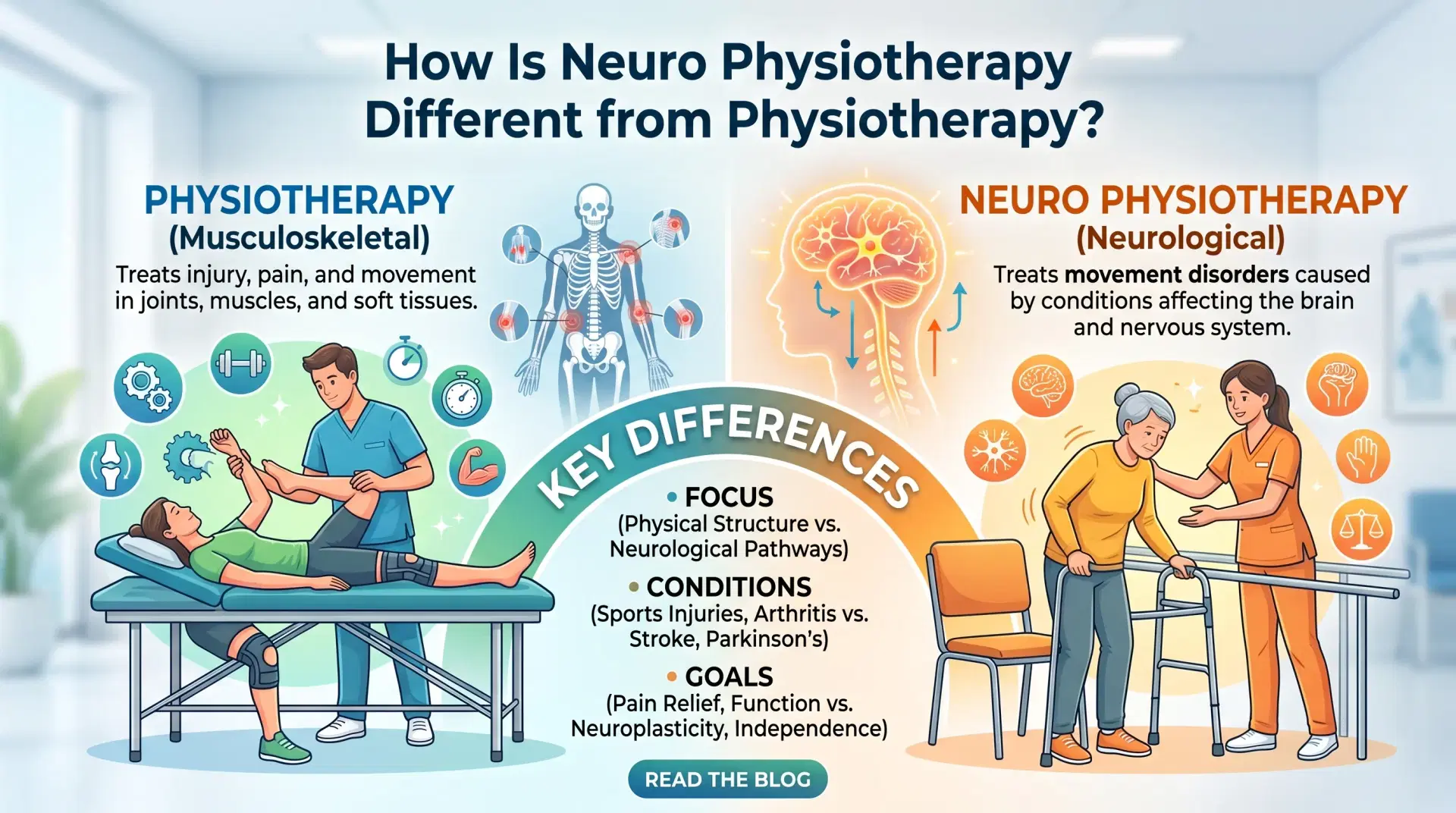
Neurotherapy vs Physiotherapy: Key Differences
| Feature | Neurotherapy | Physiotherapy |
Treatment method | Pressure on neurological points | Exercise, movement, massage |
| Use of medicines | None — fully natural | May include medicines if needed |
| Equipment used | No external equipment | TENS machine, ultrasound, massage tools, etc. |
| Basis of treatment | Nervous system stimulation | Physical rehabilitation |
| Drug-free | Yes, 100% | Not always |
| Suitable for | Neurological & systemic conditions | Injury, post-surgery, musculoskeletal |
5 Core Differences Explained in Detail
Treatment Technique
The most fundamental difference lies in how treatment is delivered.In neurotherapy, the therapist applies calculated manual pressure on specific pressure points that correspond to the nervous system's pathways. This directly influences the body's internal systems — from circulation to organ function — without any external intervention.
In physiotherapy, treatment is based on active and passive physical activities: exercises, stretching routines, joint mobilisation, and massage techniques that target muscles, bones, and connective tissue.
Use of Medicines
Neuro Physiotherapy is a completely medicine-free treatment. There are no drugs, no supplements, and no injections involved at any stage of therapy. The entire healing process relies on activating the body's own repair mechanisms.
Physiotherapy primarily focuses on physical recovery but may be prescribed alongside medicines — especially in post-operative care, inflammatory conditions, or pain management scenarios.
Equipment and Technology
Neuro Physiotherapy uses no machines or external devices whatsoever. The therapist's trained hands and deep knowledge of the body's pressure points are the only tools required.
Physiotherapy clinics are typically equipped with a range of devices, including:
- TENS (Transcutaneous Electrical Nerve Stimulation) machines
- Ultrasonic therapy machines
- Traction equipment
- Massage and vibration devices
- Resistance training and rehabilitation tools
Underlying Philosophy
Neuro Physiotherapy is based on the belief that the nervous system controls the body's ability to heal. By correcting disruptions in the neurological pathways, the body is empowered to restore balance and function from within.
Physiotherapy follows a biomechanical model — focusing on retraining physical movements, improving muscle strength, and restoring joint flexibility through systematic exercise and therapy.
Conditions Treated
While there is some overlap, each therapy has its area of strength:
Neuro Physiotherapy is particularly effective for:
- Stroke rehabilitation
- Cerebral palsy
- Parkinson's disease
- Spinal cord conditions
- Epilepsy
- Hormonal and organ-related disorders
- Chronic fatigue and lifestyle conditions
Physiotherapy is particularly effective for:
- Sports injuries and fractures
- Post-surgical rehabilitation
- Arthritis and joint pain
- Lower back and neck pain
- Balance and coordination issues
Can Neuro Physiotherapy and Physiotherapy Work Together?
Yes — in many cases, a combined approach yields the best results. At Neuromotion India, our specialists assess each patient individually and design integrated programs that may incorporate both Neuro Physiotherapy principles and evidence-based rehabilitation techniques, depending on the diagnosis and goals.
Our team of 15+ certified specialists with over 18 years of experience works collaboratively to ensure each patient receives the most effective, personalised care plan.
Why Choose Neuromotion India for Neurotherapy?
At Neuromotion India, based in Faridabad and serving Delhi NCR, we are one of India's leading neuro rehabilitation centres. Here's what sets us apart:
- 18+ years of clinical expertise in neurological rehabilitation
- 98% patient success rate based on outcome tracking
- 1,000+ patients treated across all age groups
- Completely drug-free and equipment-free Neuro Physiotherapy protocols
- Dedicated paediatric neuro rehabilitation programme
- Advanced robotic rehabilitation technology for complex cases
- Compassionate, individualized care at every step
Frequently Asked Questions (FAQs)
Q1. Is Neuro Physiotherapy scientifically proven?
Neuro Physiotherapy is based on the established science of the nervous system's role in regulating bodily functions. Clinical practice over decades has shown consistent positive outcomes, particularly in neurological conditions where conventional treatments have limited effect. At Neuromotion India, all our therapies are grounded in evidence-based principles and monitored through outcome tracking.
Q2. Is Neuro Physiotherapy safe? Are there any side effects?
Yes, Neuro Physiotherapy is extremely safe. Since it involves no medicines, no machines, and no invasive procedures, the risk of side effects is virtually nil. It is safe for patients of all ages, including
children and elderly individuals.
Q3. Can Neuro Physiotherapy replace physiotherapy completely?
Not always — it depends entirely on the condition. For purely musculoskeletal issues like sports injuries or post-fracture recovery, physiotherapy may be the primary choice. For neurological conditions, Neuro Physiotherapy of ten provides results where physiotherapy alone falls short. Your specialist at Neuromotion India will recommend the right combination for your specific case.
Q4. How long does Neuro Physiotherapy treatment take to show results?
The duration varies based on the condition, its severity, and how long the patient has had the condition. Some patients report noticeable improvement within a few sessions; others with chronic conditions may require longer structured programs. Our team provides a personalized timeline during the initial assessment.
Q5. What conditions does Neuromotion India treat with neurotherapy?
We treat a wide range of neurological and systemic conditions including stroke, cerebral palsy, Parkinson's disease, epilepsy, spinal cord disorders, multiple sclerosis, autism spectrum disorder (in children), hormonal imbalances, and chronic fatigue syndrome, among others.
Q6. Does Neuro Physiotherapy involve any pain?
Neuro Physiotherapy is generally not painful. The pressure applied during treatment is therapeutic, not aggressive. Patients may occasionally feel mild discomfort at pressure points, particularly in sensitive areas, but this is temporary and subsides quickly.
Q7. Is physiotherapy always needed after a stroke?
Post-stroke rehabilitation often benefits from a combined approach. While physiotherapy helps with movement retraining and muscle strengthening, Neuro Physiotherapy targets the underlying neurological pathways affected by the stroke. At Neuromotion India, our stroke rehabilitation program integrates both approaches for optimal recovery.
Q8. How is Neuromotion India different from regular physiotherapy clinics?
Neuromotion India is a specialised neuro rehabilitation centre — not a general physiotherapy clinic. We focus specifically on neurological conditions with a multidisciplinary team, advanced robotic rehabilitation technology, and a holistic, patient-centred approach that goes beyond standard physiotherapy.
Conclusion
Both Neuro Physiotherapy and physiotherapy are valuable therapeutic approaches — but they operate on different principles, use different methods, and are suited to different conditions.
Neuro Physiotherapy is uniquely powerful for neurological and systemic conditions, offering a
completely natural, equipment-free, and drug-free path to recovery. Physiotherapy excels in physical rehabilitation for musculoskeletal injuries and post-surgical recovery.
Choosing between them — or combining them — should always be based on an expert clinical assessment.
If you or a family member is dealing with a neurological condition, reach out to Neuromotion India today.
📍 House No. 2548, HUDA StaffColony, Sector 16, Faridabad, Delhi NCR 📞 +91 92684 67004