Occupational Independence and the Role of Physical Rehabilitation
In this article
Occupational Independence and the Role of Physical Rehabilitation
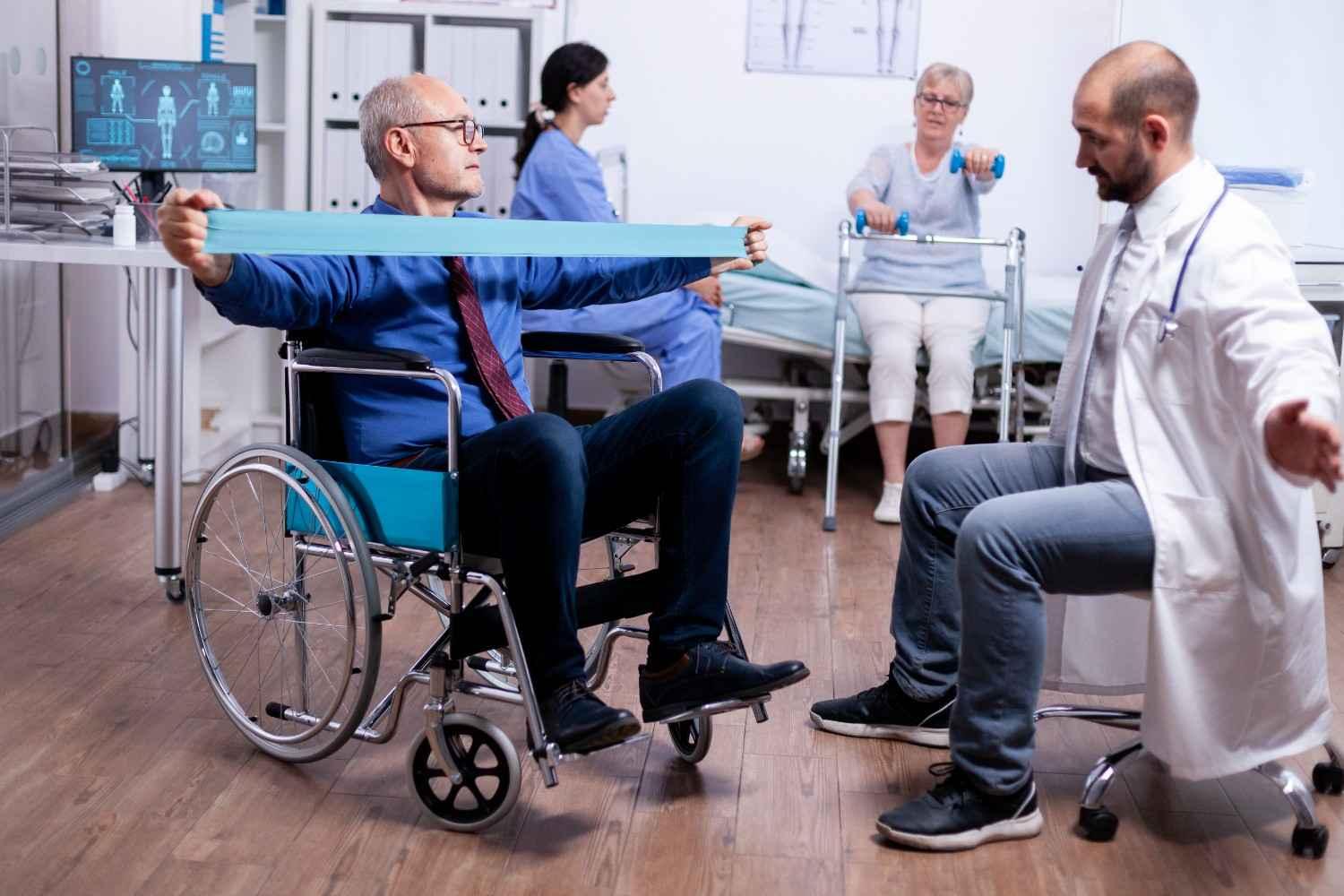
Independence is about more than a single movement; it is about being able to participate in the roles and routines that matter most to a person's life. Physical rehabilitation can support this broader goal after a stroke, brain injury, spinal cord injury, or other neurological condition.
Adult neuro-rehabilitation focuses on the person's current abilities and meaningful functional goals. Physiotherapy may be one part of this process, with treatment selected after assessment and coordinated with other healthcare professionals when required.
For adults in Delhi NCR, including Faridabad, Gurgaon, Noida, and Ghaziabad, Neuromotion India provides specialized rehabilitation support for neurological and functional challenges.
Quick Summary
What Is Occupational Independence? can be addressed through individualized rehabilitation.
How Physical Rehabilitation Supports Independence can be addressed through individualized rehabilitation.
Rebuilding Self-Care and Daily Living Skills can be addressed through individualized rehabilitation.
Returning to Work and Productive Roles can be addressed through individualized rehabilitation.
Rehabilitation for Household and Community Participation can be addressed through individualized rehabilitation.
The Role of Endurance and Stamina in Independence can be addressed through individualized rehabilitation.
Rehabilitation goals should be based on assessment, safety, and the individual's priorities.
Recovery varies significantly between adults, and there is no universal recovery timeline.
Multidisciplinary rehabilitation may be appropriate for complex neurological conditions.
Professional assessment can help determine the most suitable rehabilitation pathway.
Table of Contents
1. What Is Occupational Independence?
2. How Physical Rehabilitation Supports Independence
3. Rebuilding Self-Care and Daily Living Skills
4. Returning to Work and Productive Roles
5. Rehabilitation for Household and Community Participation
6. The Role of Endurance and Stamina in Independence
7. Addressing Safety Concerns During Independent Activities
8. Occupational Independence as a Long-Term Goal
9. How Neuromotion India Supports Occupational Independence
10. When Should You Seek Professional Rehabilitation?
What Is Occupational Independence?
Occupational independence refers to a person's ability to participate in meaningful daily roles and activities with an appropriate level of support. These roles may include self-care, household responsibilities, work, education, and community participation. India's rehabilitation sector is projected to be worth approximately USD 22 billion in 2026, reflecting growing national investment in helping adults regain exactly this kind of independence.
How Physical Rehabilitation Supports Independence
Physical rehabilitation can address the strength, balance, coordination, and endurance needed to carry out meaningful roles safely. Treatment is individualized according to the person's assessment, abilities, and personal priorities.
If you or your family member is experiencing difficulty with how physical rehabilitation supports independence, a professional rehabilitation assessment can help identify appropriate next steps.
Rebuilding Self-Care and Daily Living Skills
Rehabilitation may focus on tasks such as dressing, bathing, grooming, and eating, helping adults regain confidence and independence in essential daily routines.
Returning to Work and Productive Roles
For adults aiming to return to work or other productive roles, rehabilitation may address the specific physical demands of the role, alongside broader strength, endurance, and coordination goals.
Rehabilitation for Household and Community Participation
Physical rehabilitation can also support participation in household responsibilities and community activities, such as managing stairs, using transport, or attending social and family events.
If you or your family member is experiencing difficulty with rehabilitation for household and community participation, a professional rehabilitation assessment can help identify appropriate next steps.
The Role of Endurance and Stamina in Independence
Endurance and stamina are often central to sustained independence, since many daily roles require repeated or prolonged physical effort rather than a single movement.
Addressing Safety Concerns During Independent Activities
Rehabilitation may also address safety strategies for independent activities, particularly for adults with balance difficulties or a history of falls.
Occupational Independence as a Long-Term Goal
Occupational independence is often best understood as a long-term goal that evolves over time, with rehabilitation adapting as the person's abilities and priorities change.
If you or your family member is experiencing difficulty with occupational independence as a long-term goal, a professional rehabilitation assessment can help identify appropriate next steps.
How Neuromotion India Supports Occupational Independence
Neuromotion India provides individualized rehabilitation support for adults working toward occupational independence. An assessment can help identify current abilities and establish practical, meaningful goals. Patients from Faridabad and across Delhi NCR can seek professional assessment based on their needs.
When Should You Seek Professional Rehabilitation?
Professional assessment can be useful when an adult has persistent difficulty with self-care, household tasks, work-related activities, or community participation. Rehabilitation goals can change as recovery progresses, so reassessment may also be appropriate.
When to Seek Professional Help
Professional rehabilitation assessment may be appropriate when an adult has persistent or worsening difficulty with movement, balance, walking, transfers, upper limb function, endurance, or everyday independence. New or sudden neurological symptoms require urgent medical evaluation rather than waiting for routine physiotherapy.
Do not delay professional evaluation when functional difficulties are interfering with safety or everyday life.
Conclusion
Occupational Independence and the Role of Physical Rehabilitation should be approached as an individualized rehabilitation process rather than a fixed set of exercises. Physiotherapy can focus on practical goals such as mobility, balance, strength, coordination, endurance, and participation in everyday activities, depending on the individual's condition.
Recovery can vary substantially between adults. A structured assessment can help identify current abilities, limitations, safety considerations, and realistic goals. Where needed, physiotherapy can also be coordinated with other rehabilitation professionals to support a broader recovery plan.
Neuromotion India offers specialized adult neuro-rehabilitation support across Delhi NCR, including Faridabad, Gurgaon, Noida, and Ghaziabad. Book an offline consultation with the rehabilitation team to receive a personalized assessment and understand the most appropriate rehabilitation pathway for your condition.
Frequently Asked Questions
1. What does occupational independence mean in rehabilitation?
It refers to a person's ability to participate in meaningful daily roles, such as self-care, household tasks, or work, with an appropriate level of support.
2. Can physiotherapy help adults return to work after a neurological condition?
Physiotherapy can address physical demands relevant to work, although readiness to return depends on the individual's overall condition and job requirements.
3. Is occupational independence only relevant for younger adults?
No. Occupational independence is relevant across age groups, since it relates to participation in any meaningful daily role, not only paid work.
4. How does rehabilitation address self-care tasks?
Rehabilitation may include task-specific practice for activities such as dressing, bathing, and grooming, adapted to the individual's abilities.
5. Can rehabilitation help with safety at home?
Yes. Rehabilitation can include safety strategies and balance training relevant to daily activities at home, particularly for adults with a history of falls.
6. How long does it take to regain occupational independence?
There is no single timeline. Progress depends on individual factors and may continue over an extended period with consistent rehabilitation.
7. What is adult neuro-rehabilitation?
Adult neuro-rehabilitation is a structured approach to helping adults manage functional changes caused by neurological injury or disease, often involving physiotherapy and other disciplines.
8. Where can adults access rehabilitation support in Faridabad?
Adults in Faridabad and the wider Delhi NCR region can seek assessment from a specialized rehabilitation provider such as Neuromotion India.
9. When should someone consider rehabilitation for independence-related goals?
Rehabilitation may be worth considering when self-care, household, or work-related activities have become difficult following a neurological condition.