Neuro Physiotherapy vs. Regular Physiotherapy
In this article
1. What is Regular Physiotherapy?
Information Type: Definition & Overview
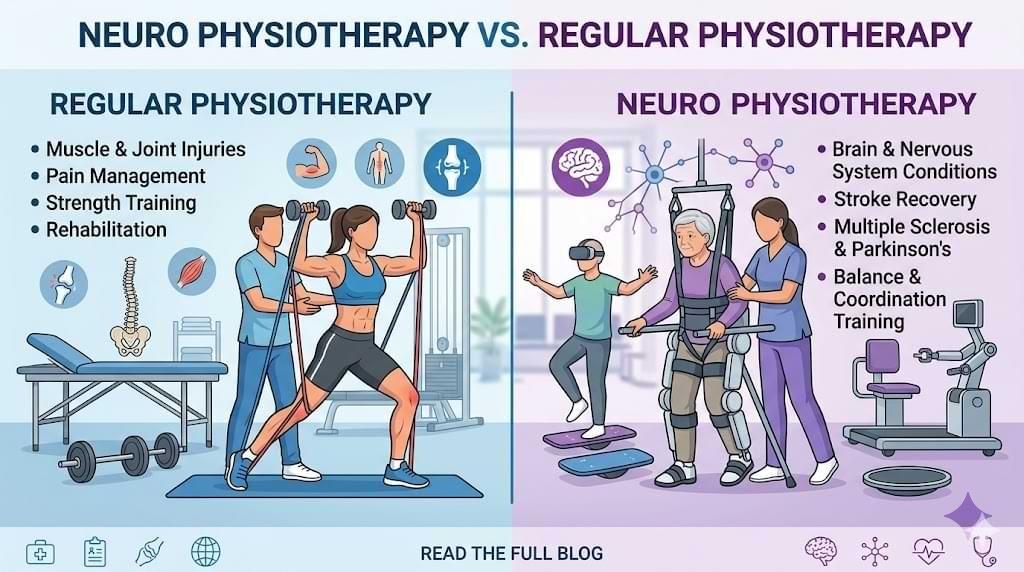
Regular physiotherapy, also called general physiotherapy or musculoskeletal physiotherapy, focuses on diagnosing and treating physical impairments, disabilities, and pain related to the musculoskeletal system — that is, muscles, bones, joints, tendons, and ligaments.
It is widely used after sports injuries, orthopaedic surgeries, postural problems, and general body aches. The goal is to restore mobility, strength, and function through targeted exercises and manual techniques.
Common Conditions Treated in Regular Physiotherapy
Back pain and neck pain
Knee injuries, ligament tears, ACL repairs
Fractures and post-surgical rehabilitation
Arthritis and joint stiffness
Sports injuries — sprains, strains, tendinitis
Postural correction and ergonomic issues
Frozen shoulder and rotator cuff problems
2. What is Neuro Physiotherapy?
Information Type: Definition & Specialization
Neurological physiotherapy, commonly called neuro physiotherapy, is a highly specialized branch that deals with conditions originating in the nervous system — specifically the brain, spinal cord, and peripheral nerves. It targets neurological disorders that affect movement, balance, coordination, sensation, and cognitive function.
Neuro physiotherapists are trained to understand how brain plasticity (neuroplasticity) works and use this understanding to design goal-oriented rehabilitation programs that retrain the brain and nervous system.
Common Conditions Treated in Neuro Physiotherapy
Stroke (CVA) — hemiplegia, foot drop, speech-related movement issues
Parkinson's disease — tremors, rigidity, freezing of gait
Multiple Sclerosis (MS) — fatigue, spasticity, balance problems
Traumatic Brain Injury (TBI) — cognitive-motor rehabilitation
Spinal Cord Injury (SCI) — paraplegia, quadriplegia
Cerebral Palsy (CP) — developmental movement disorders
Guillain-Barré Syndrome, peripheral neuropathy
Vestibular disorders — vertigo, balance dysfunction
3. Key Differences: At a Glance
Information Type: Comparison Table
| Parameter | Neuro Physiotherapy | Regular Physiotherapy |
| Focus Area | Nervous system (brain, spinal cord, nerves) | Muscles, joints, bones, tendons |
| Specialization | Highly specialized — neurological conditions | General / musculoskeletal conditions |
| Therapist Training | Advanced neuro-rehabilitation training | General physiotherapy degree |
| Key Goal | Rewire brain pathways (neuroplasticity) | Restore mobility and reduce pain |
| Primary Tools | NDT, PNF, FES, robotic therapy, mirror therapy | Manual therapy, ultrasound, TENS, exercises |
| Conditions | Stroke, Parkinson's, MS, CP, SCI, TBI | Back pain, sports injury, arthritis, fractures |
| Duration | Long-term, goal-phased programs | Short-to-medium term treatment |
| Assessment | Neurological & cognitive function tests | Range of motion, strength & pain tests |
| Outcome Measure | Motor recovery, independence, quality of life | Pain relief, functional strength, mobility |
4. Techniques Used
Information Type: Clinical Methods & Approaches
Neuro Physiotherapy Techniques
NDT (Neurodevelopmental Treatment) — motor relearning through guided movement
PNF (Proprioceptive Neuromuscular Facilitation) — uses sensory input to improve motor patterns
Mirror Therapy — helps stroke patients recover limb function using visual feedback
FES (Functional Electrical Stimulation) — stimulates weakened muscles electronically
Robotic-Assisted Therapy — precision movement repetition for gait and arm rehab
Constraint-Induced Movement Therapy (CIMT) — forces use of the affected limb
Vestibular Rehabilitation — treats balance and inner-ear-related disorders
Cognitive Rehabilitation — addresses attention, memory, and executive function deficits
Regular Physiotherapy Techniques
Manual Therapy — joint mobilization, manipulation, soft tissue work
Therapeutic Exercises — strengthening, stretching, and endurance programs
TENS (Transcutaneous Electrical Nerve Stimulation) — pain management
Ultrasound Therapy — deep tissue healing
Heat & Cold Therapy — inflammation control
Kinesio Taping — joint support and proprioceptive feedback
Hydrotherapy — water-based exercise for low-impact rehabilitation
5. Who Should Choose Which?
Information Type: Patient Decision Guide
Choose Regular Physiotherapy if you have: a recent sports injury, post-surgery pain, musculoskeletal stiffness, back/neck pain, or need posture correction.
Choose Neuro Physiotherapy if you have: experienced a stroke, been diagnosed with Parkinson's, Multiple Sclerosis, Cerebral Palsy, Spinal Cord Injury, or any condition where the neurological system is primarily affected.
Note: Some patients may need both. For example, a stroke patient with a secondary shoulder injury may require a combined rehabilitation program.
Blog Overview
Neuro Physiotherapy vs Regular Physiotherapy: What's the Difference?
When someone faces a health challenge involving movement or pain, physiotherapy is often the first line of treatment. But not all physiotherapy is the same. Understanding the difference between regular (musculoskeletal) physiotherapy and neuro physiotherapy is critical to getting the right care.
Regular physiotherapy is designed for people dealing with joint pain, muscle injuries, or post-operative recovery. It uses hands-on techniques, exercises, and electrotherapy to reduce pain and improve physical function. Millions of people benefit from it annually for conditions like lower back pain, knee osteoarthritis, or after orthopedic surgeries like ACL repair.
Neuro physiotherapy, on the other hand, is a specialized discipline targeting the central and peripheral nervous system. It is built on the principle of neuroplasticity — the brain's remarkable ability to rewire itself following injury or disease. This makes it essential for patients recovering from stroke, managing Parkinson's disease, or living with Multiple Sclerosis.
The techniques differ significantly. While regular physiotherapy may employ ultrasound, TENS, or manual therapy, neuro physiotherapy uses methods like Mirror Therapy, Functional Electrical Stimulation (FES), and Constraint-Induced Movement Therapy. These approaches are purpose-built to stimulate the nervous system and facilitate motor relearning.
Choosing the right type of physiotherapy depends entirely on the root cause of the condition. Musculoskeletal issues benefit from general physiotherapy, while neurological impairments require a specialized neuro rehabilitation approach. Getting this distinction right can dramatically improve outcomes and quality of life.
At NeuroMotion India, our team of expert neuro physiotherapists provides personalized, evidence-based rehabilitation programs tailored to each patient's neurological profile. Whether you are recovering from a stroke or managing a progressive neurological condition, we are here to help you regain independence and confidence.
Book Your Appointment Today | neuromotionindia.com/contact#appointment